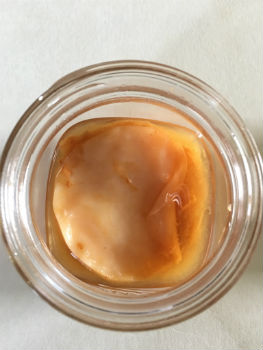
 Most of us have probably heard of Kombucha Tea, made from fermented sweet tea. We make and drink it regularly (and it makes awesome cocktails). We also make milk and water kefir, two other probiotic and delicious beverages. After allowing it to languish in a cupboard for a year (really!), we pulled the Jun scoby out and re-started it.
Jun tea, while similar to kombucha in some ways, is a distinctly different beverage. While kombucha is made with black or green tea (or a combination of these), sweetened with sugar, and fermented using finished kombucha tea from a previous batch plus the kombucha scoby, jun is made from green tea only, sweetened only with raw honey. A “mother” (scoby) is also floated in the brew. Continue reading “Another Probiotic Beverage Worth Exploring: Jun Tea”
 We make kombucha tea in gallon barrel jars, with a batch being “harvested” every Sunday. Once bottled, the ‘booch sits in airtight bottles for a few days for a second ferment. It’s during this second ferment that additional flavorings may be added. The two week initial fermentation period is what seems to work best to achieve the flavor profile we like: slightly tart, but not vinegary. Some people let it go longer, but it can get pucker-you-up tart with time. Once it becomes too sour, there’s no going back.
 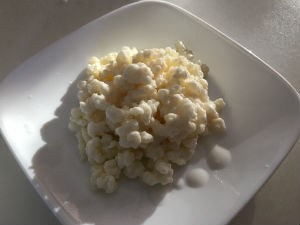 We’re into fermenting. Right now, we do kombucha, water kefir, and milk kefir (and lacto-fermented sauerkraut). There’s also a really chunky Jun scoby languishing up in the cupboard, but that’s a story for another day.
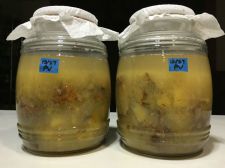 Two batches of pineapple scrap vinegar are sitting on the counter, fermenting. It’s a good way to use the parts of a pineapple you’d throw out (or maybe compost), and you end up with a useful product.
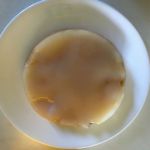 Per the standard procedure, new sweet tea was made, inoculated with some of the previous batch, the jar was filled with reverse osmosis filtered water, and the SCOBY was added to the fresh mix. It will sit, covered with a breathable cover, for two weeks. If it ferments for longer than that, it will become much more vinegary…in fact, there are designated jars with batches that have been left for a month or longer, specifically to turn into