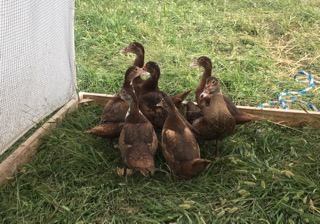
 We’ve had many integrations this year: several groups of chicks as well as ducklings. Integration isn’t easy – the older animals aren’t nice to the younger ones (think freshman and seniors), and it’s new and stressful for the young ones. Eventually, though, it has to happen. The last group of ducklings has finally been integrated into the main group – hooray!
Phoebe’s 7 ducklings are the last to join the main group. They, like Coraline’s broody-raised ducklings, are more skittish than our incubated ducklings, but seemed to have a very easy assimilation into the group when we let them mingle during the day. They were quick to join in at feeding time and seemed to be subject to less “hazing” (feather grabbing by older ducks and drakes) than other juveniles we’ve integrated. Continue reading “The Year’s Last Duck Integration”
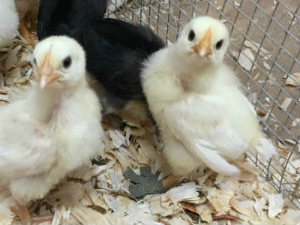 The American Bresse, Black Copper Marans, and barnyard mix chicks are just over a week old. They’re growing fast – feathers are coming in already.
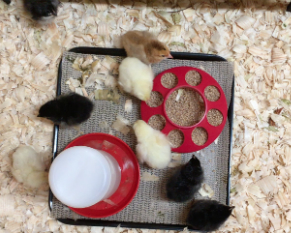 Our two groups of incubator eggs hatched this weekend, and we now have 16 fluffballs running around the brooder. Some of the eggs were shipped, and the hatching results were mediocre at best. Here’s how it shook out:
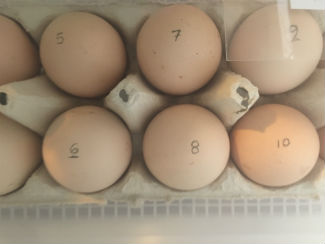 In addition to the Black Copper Marans eggs we put in the incubator a couple of days ago, we just started incubating some American Bresse eggs. While we have, to this point, raised dual-purpose chickens primarily for eggs, these are intended to be primarily meat chickens.
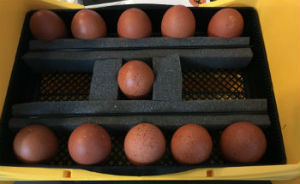 So, we have the fancy yellow incubator and the new hatcher just sitting idle in the gym/feed storage/sometime-duckling-brooder room downstairs. After the first hatcher fiasco with the still-air wafer thermostat incubator, we upgraded to a digital forced air model that seems to hold temperature much better than the other one did. Shockingly, the new hatcher hasn’t even been used yet. Seems like we should be getting our money’s worth out of this equipment. Guess it’s time to hatch some eggs!
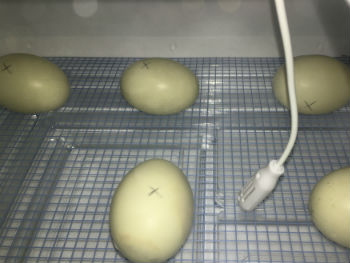 The second batch of Muscovy eggs in the incubator should hatch in about 2 days. While they have a reputation for being difficult to artificially incubate, there is excellent information readily available to first time incubators from Muscovy enthusiasts who have experience incubating these eggs. “Lessons learned” shared by others can save you a lot of grief.