Self-taught farmers confidently raising chickens, ducks, geese, and pigs. Our focus is on practices that are environmentally harmonious and respectful to our livestock. We appreciate the beauty around us, clean eating, fermenting, and responsibly utilizing the bounty of the land. If you like thinking for yourself, continuous learning, and connecting with the homesteader lifestyle, check us out.
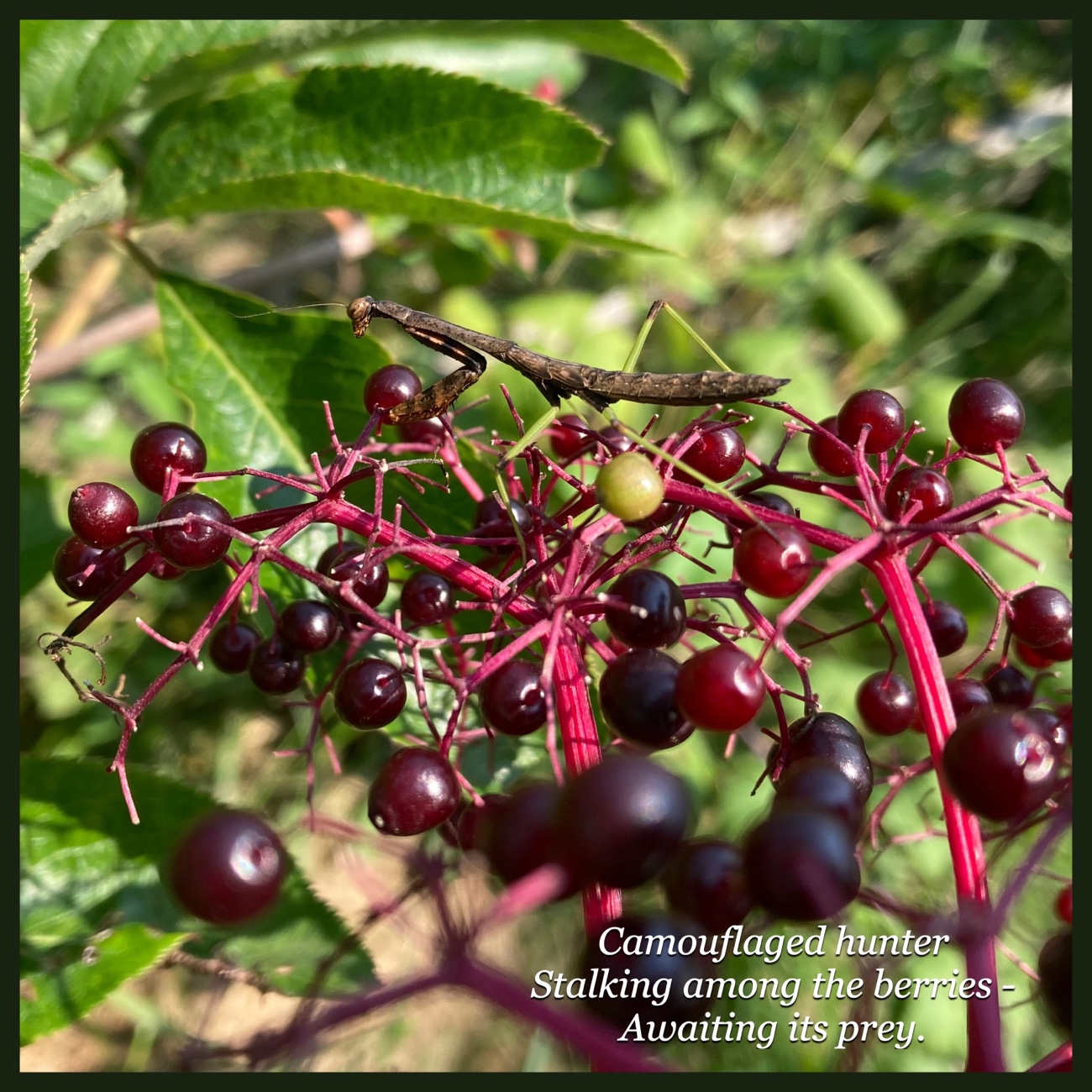
The elderberry harvest was phenomenal this year; there were many more productive bushes, providing a bounty of elderflowers (from which an ethereally delightful wine was made), followed by more berries, than I’ve seen in the past. When I went out to collect a last few clusters for syrup before the berries overripened, I almost didn’t notice the mantid patrolling the bush…and you can see why.
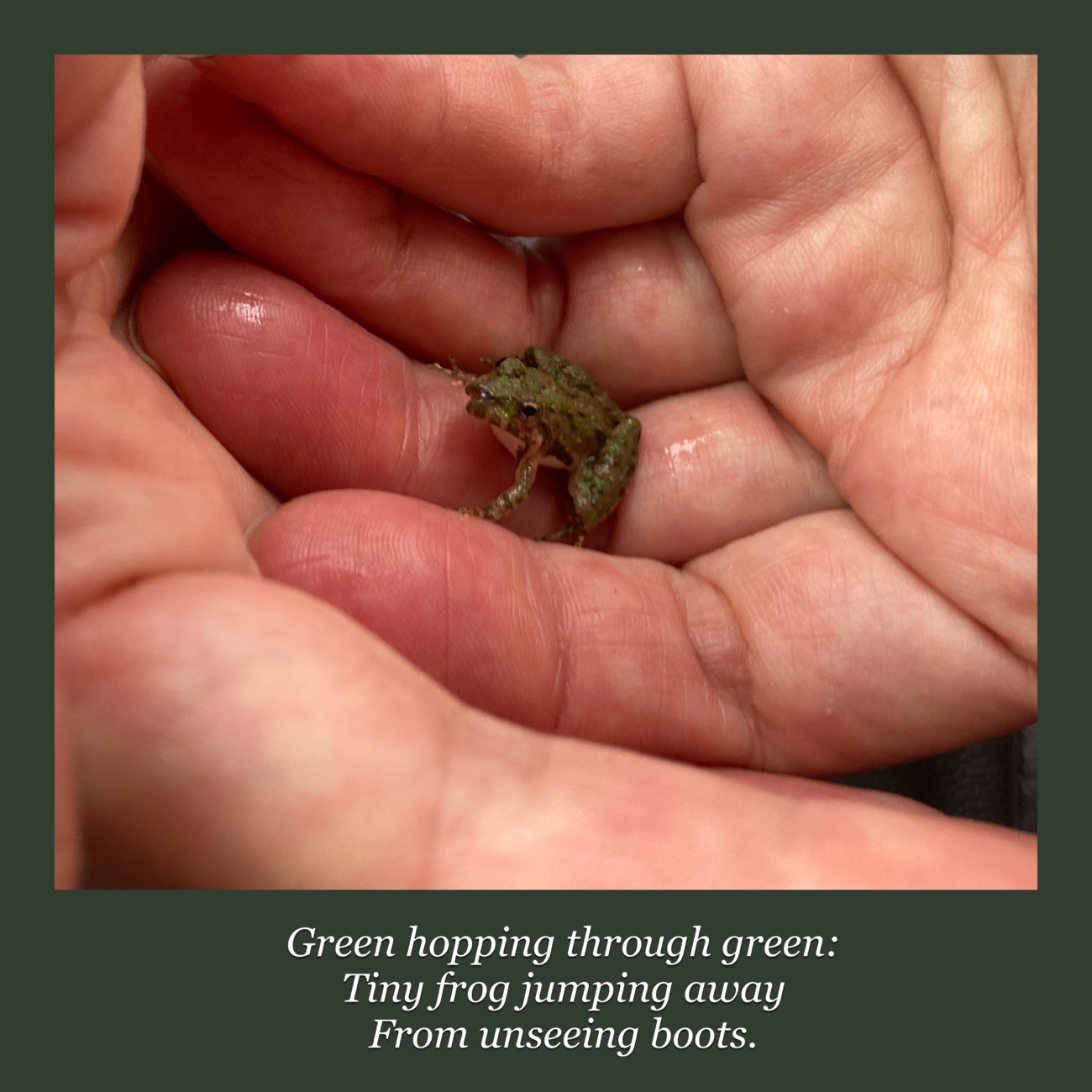
Life can be hard if you’re a very tiny frog. I found this diminutive one near a puddle on the edge of the driveway. It jumped away from me as I walked near it, through a grassy area turned into marsh by recent rainfall. I think I may have seen it the other day – something leapt in the grass in the same area – but concluded that it was probably a large grasshopper. I wasn’t convinced, though.
This tiny frog could jump astonishingly high, flinging itself away so violently in its efforts to escape that it flipped itself over more than once. Fortunately, it landed in thick, wet, grass and I was able to very gently capture it for a very quick photo (I am an experienced frog catcher, having spent a good portion of my youth practicing the skill – lol!).
Interestingly, this frog seems to have a cleft in its upper “lip” area that looks (at least externally) similar to a human cleft palate. Whether the deformity was congenital or due to injury, the little creature seemed otherwise healthy. I returned it to the grassy edge and wished it luck…because with all of the obstacles to living its life – even in the country – it needs it.
Did you figure out the “two lives” reference in the title? From Vocabulary.com: “the word amphibian comes from the Greek word amphibios, which means ‘to live a double life'”, referring to the fact that amphibians live their early lives in water, then, later, on land.
Read more about why frogs are important: https://phys.org/news/2017-05-frogs.html
Are you wondering why you haven’t seen many posts here lately about what’s going on at the farm? Have we packed it in, rehomed the animals, started a new chapter? Short answer: no.
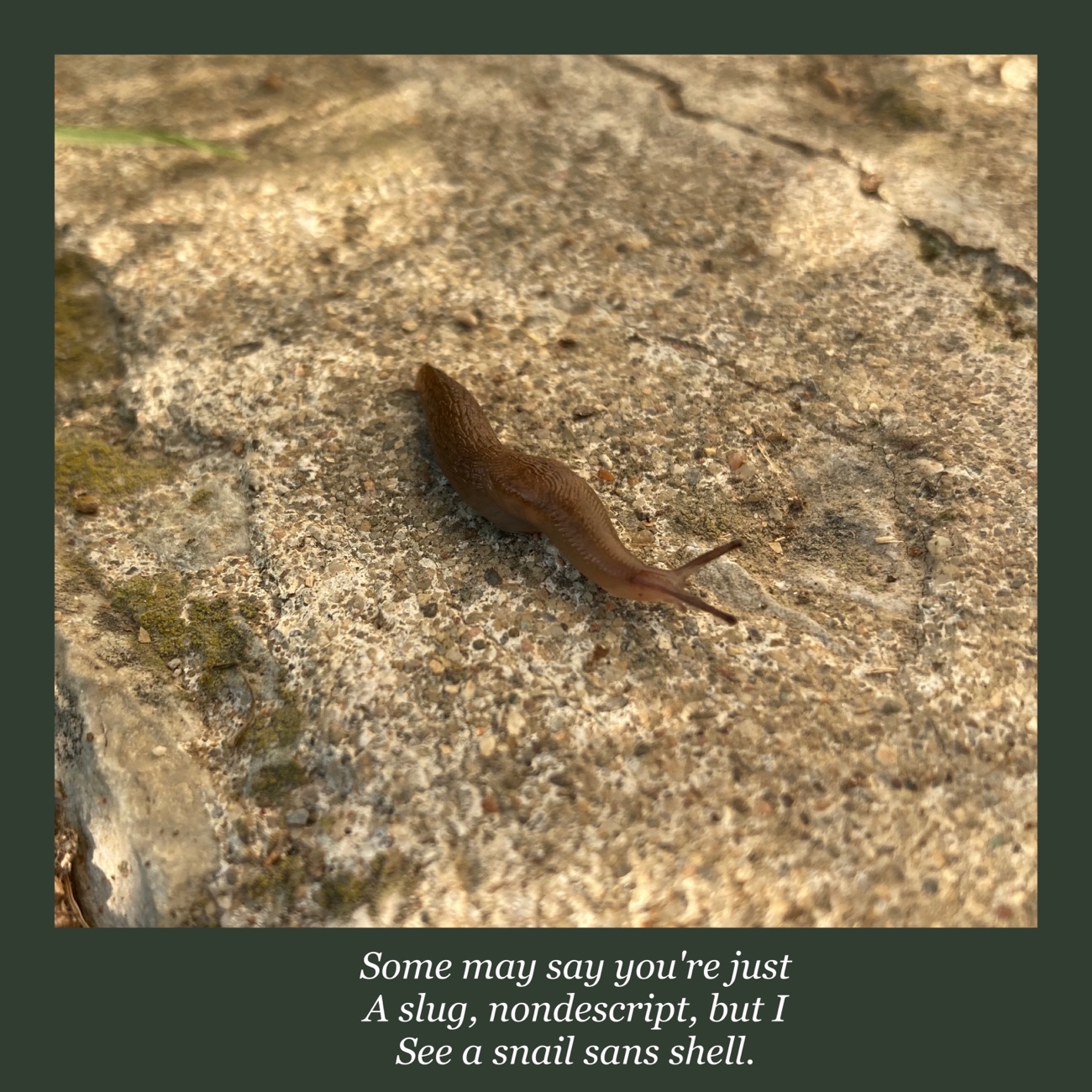
Slugs seem to get no love. I’ve considered why I’m enamored of snails, with their wonderfully whorled shells, but not slugs…and realized that it’s unfair. A slug is basically a snail, without that magnificent shell upon its back. Did it choose to live its life without a shell? Of course not. So, I’m consciously making an effort to appreciate the beauty of the slug, like the subtle but striking raised pattern on its skin – resembling a fingerprint – orhow it seems to effortlessly and soundlessly glide along the ground.See the beauty of the slug today.
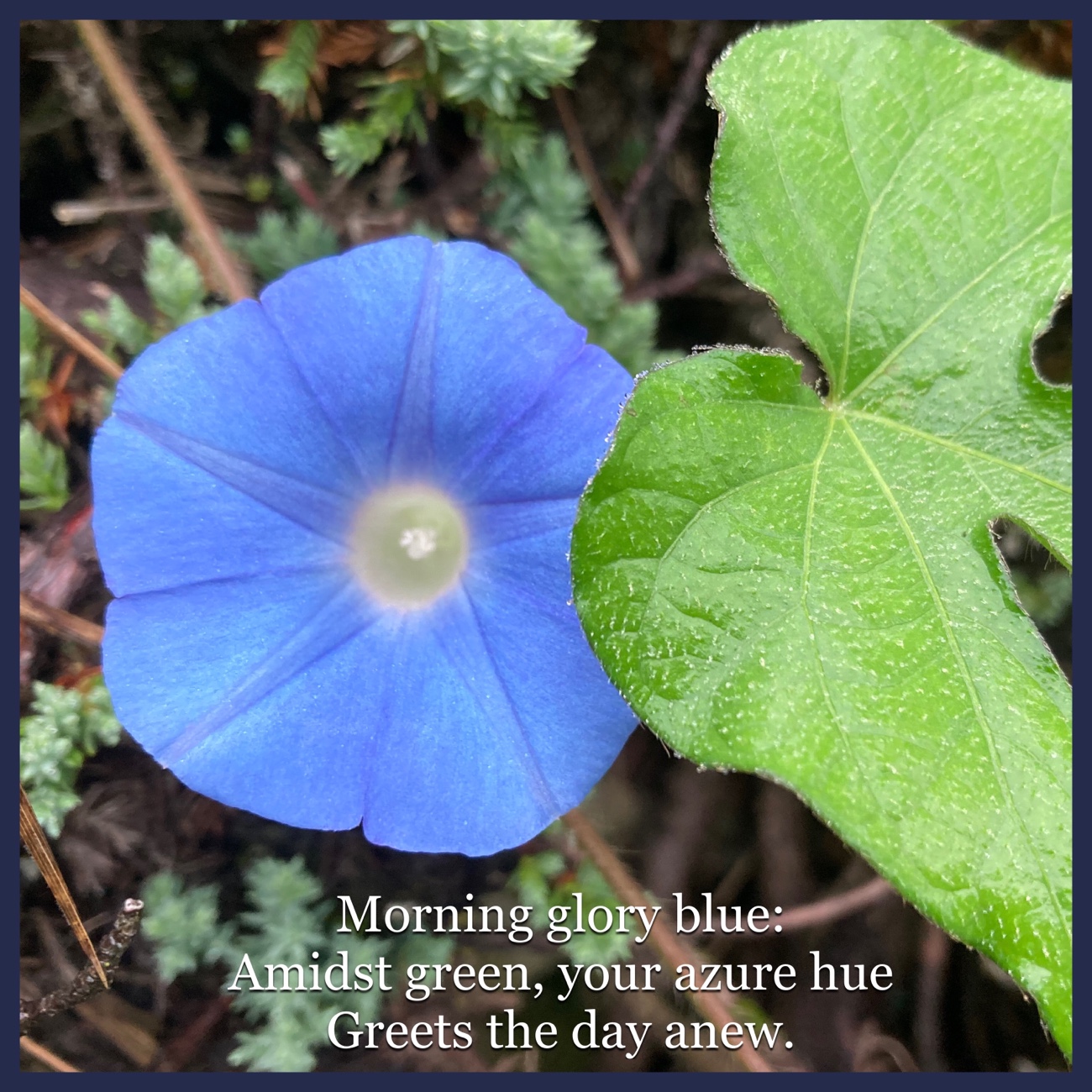
Inviting, yes…and uninvited. But no invitation is needed for this lovely greenery: morning glory vines just seem to appear along a rock retaining wall near our house, stunning with their early-morning cornflower radiance. A cheery flower, indeed, and a wise one, retiring (for the day) in the afternoon. That we should all keep such a schedule – an afternoon siesta might keep us similarly glorious!
And for the pedantic, I know rhyming haiku is somewhat frowned upon in poetry circles. I don’t care. The verse flowed, so I’m going with it. I am, after all, a rebel at heart.
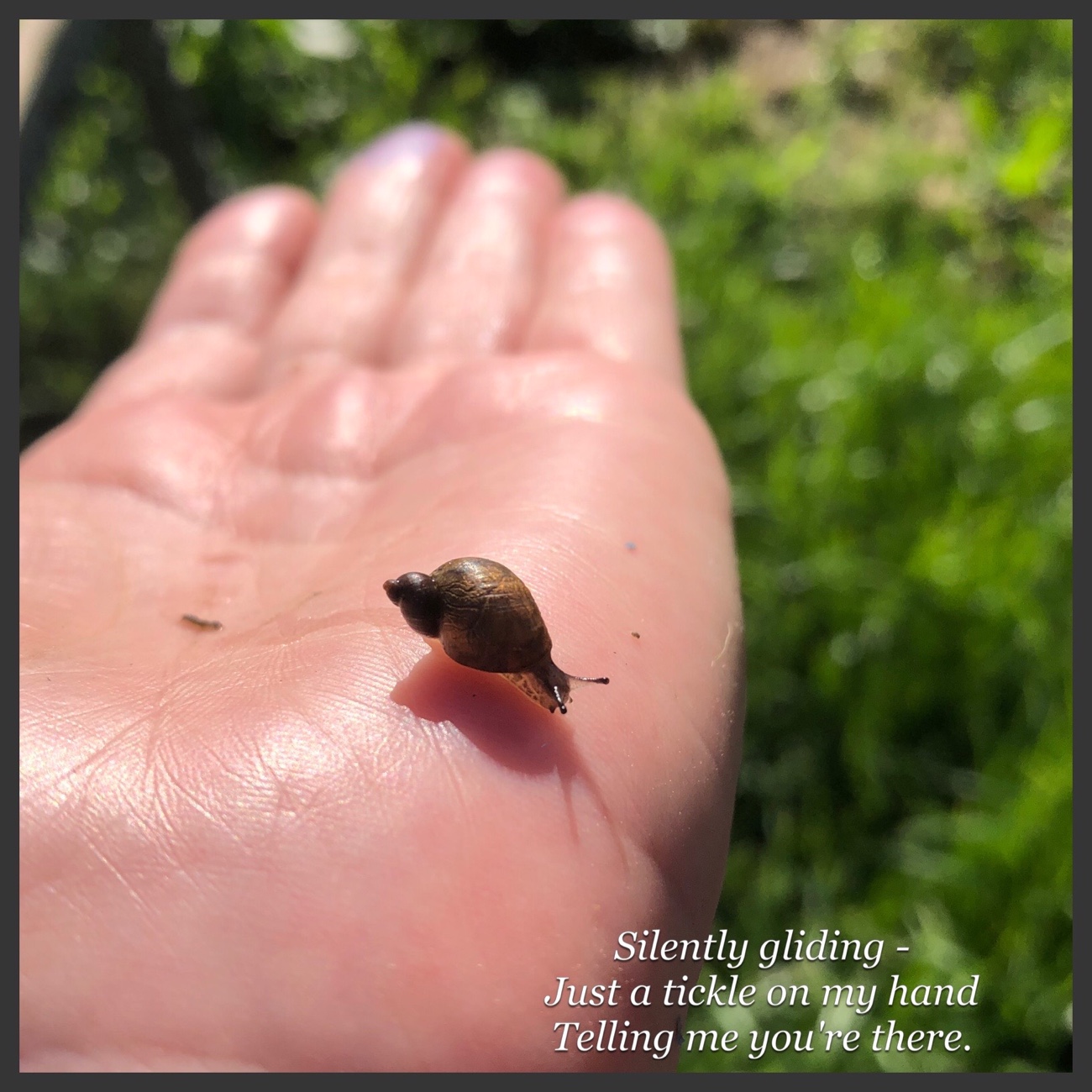
I found a snail in the duckling swimming tub (it’s deep enough for them to swim in, but shallow enough to prevent drowning) this morning. At first, I thought it was just another slug, but something caught my eye.