Self-taught farmers confidently raising chickens, ducks, geese, and pigs. Our focus is on practices that are environmentally harmonious and respectful to our livestock. We appreciate the beauty around us, clean eating, fermenting, and responsibly utilizing the bounty of the land. If you like thinking for yourself, continuous learning, and connecting with the homesteader lifestyle, check us out.
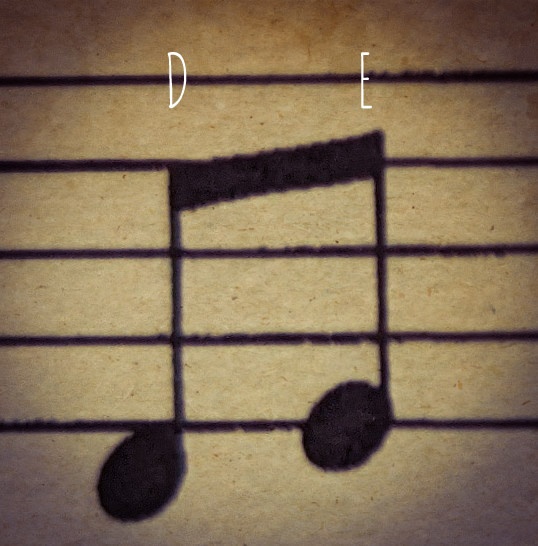
The next two notes in the recorder learning lineup are low D and low E (hereafter referred to as just D and E in this post – there are also high versions of the notes), and while the fingering for both is arguably easier than for F, they still pose their own challenges…but surmountable ones.
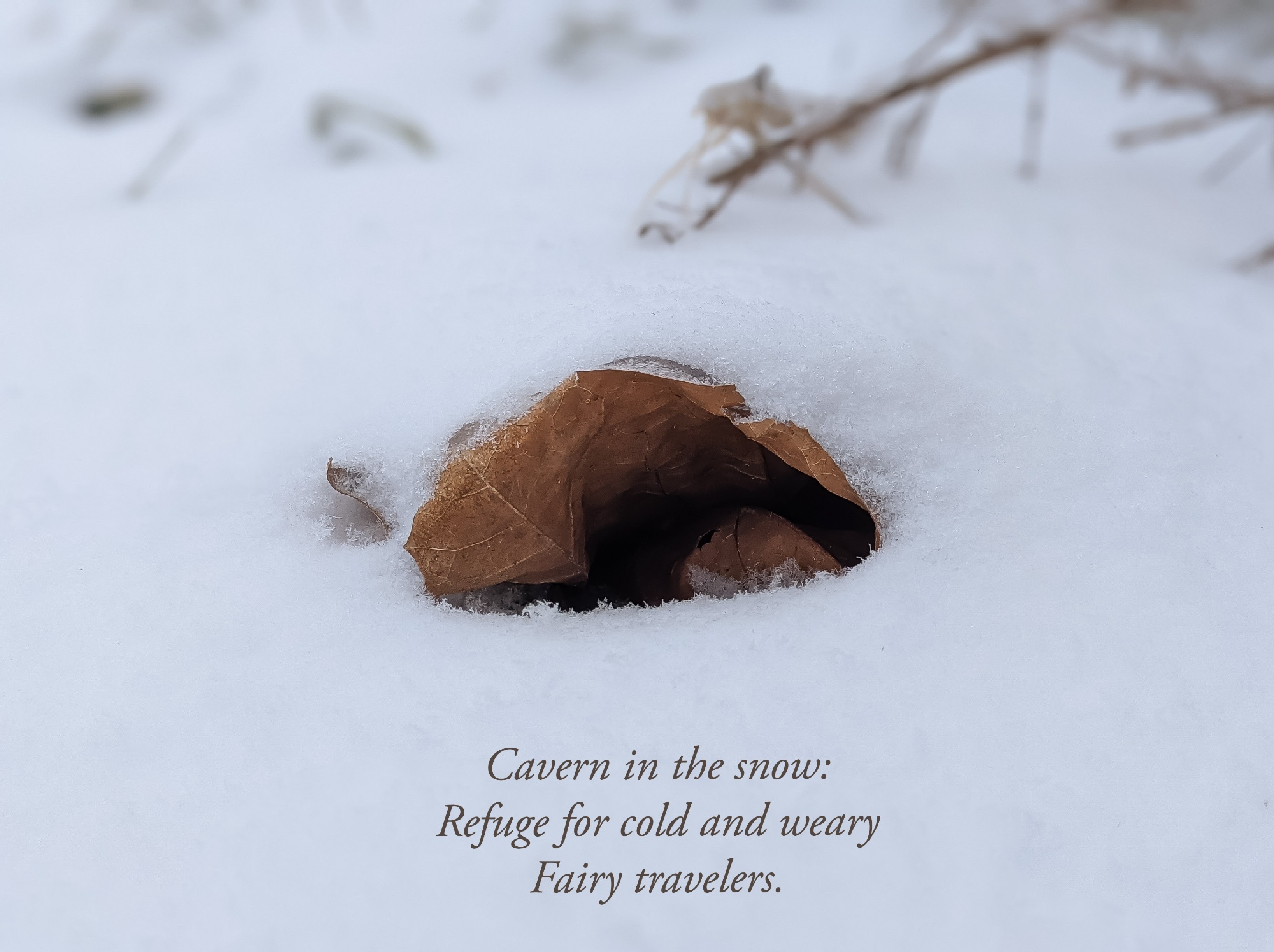
The snow creates so many opportunities for, frankly, woolgathering and whimsy. When I spied a tiny cave created by a curled leaf, I imagined that wandering creatures like fairies might take advantage of the diminutive shelter to get out of the freezing wind and warm up a bit before continuing on. Safe journeys, my friends.
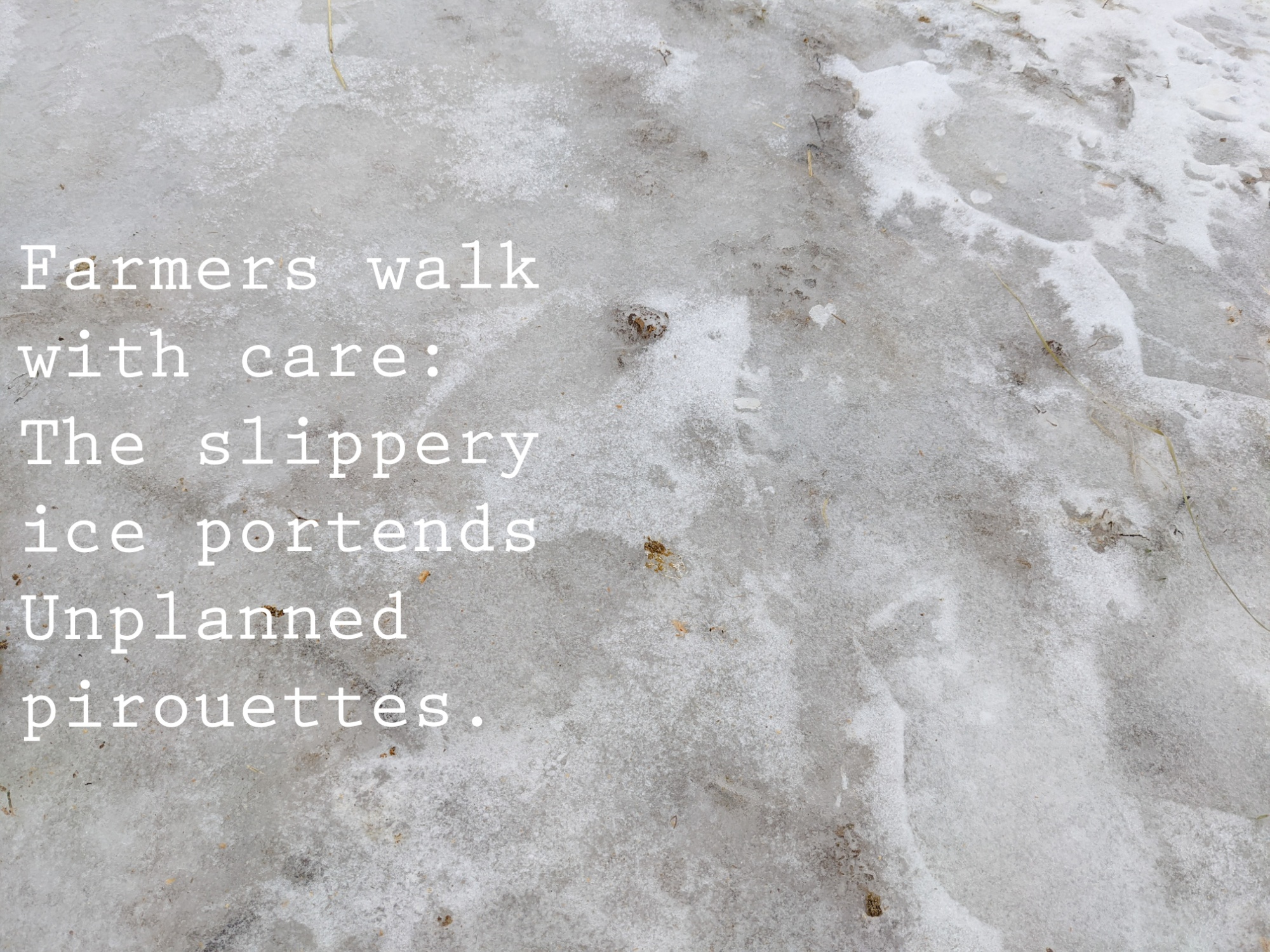
Ah, the cursed ice! Despite how carefully I’ve tried to tread, my luck finally ran out and I did some kind of unwanted (and undeniably ungraceful) move trying to prevent myself from landing hard on the icy ground.
While I may ultimately have failed to stop the tumble, at least it really only involved a slow-motion (at least in my head) flailing of arms and awkward footwork, resulting in a semi-rough landing on a knee and rear. That ice felt less forgiving than concrete! I think the fact that I was pulling the loaded cart actually helped prevent a more painful fall, and I seem to have escaped physical injury.🍀 Seriously though, the ice is bad news…you don’t know where it’s slick – assume everywhere – or when you’re going to lose footing. And, thanks to heavy sleet and periodic melt that refreezes at night, the ground is one, thick, solid sheet of ice. A veritable skating rink. There’s no escape.
To my fellow farmers (and anyone else) dealing with the ice, I wish you the best of luck in keeping your footing. An injury on the farm is a big deal, so I hope we all weather the storm as well as can be expected and come out of it as hearty and hale as we were before this weather blew in…and with our dignity intact.
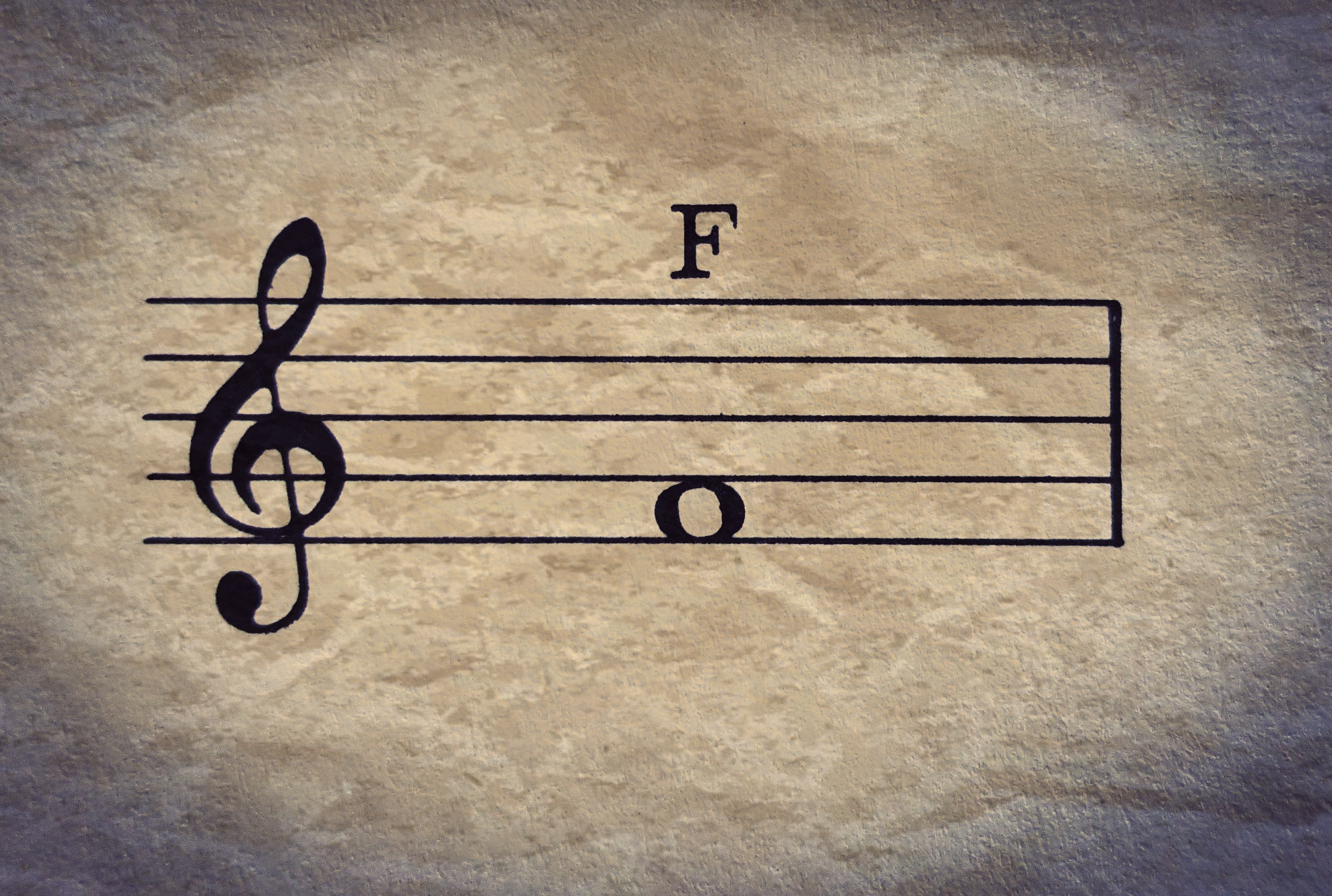
Relative to F, dastardly D was easy to learn. F requires that all holes except the fifth be covered, and the bottom hole(s) are actually covered using a key due to the reach required. Playing this new note at first, it sounded pretty effing bad.
I’m still learning how to play the recorder, and I’ve practiced daily. I’ve improved, but have been spending more time than I had hoped on learning how to play a (high) “D”. When the student music book devotes multiple pages to the note, it’s a clue about how difficult it may be to play competently.
How about a lighthearted distraction? Our ducks love it when it’s warm enough for their kiddie pools to be out, even in winter. Because they’ll bathe as long as there’s water available – even if the temperatures are below freezing – we dump the pools at evening feeding time (and put them away), so that they’ll be dry when they go into their coop at night.