Self-taught farmers confidently raising chickens, ducks, geese, and pigs. Our focus is on practices that are environmentally harmonious and respectful to our livestock. We appreciate the beauty around us, clean eating, fermenting, and responsibly utilizing the bounty of the land. If you like thinking for yourself, continuous learning, and connecting with the homesteader lifestyle, check us out.
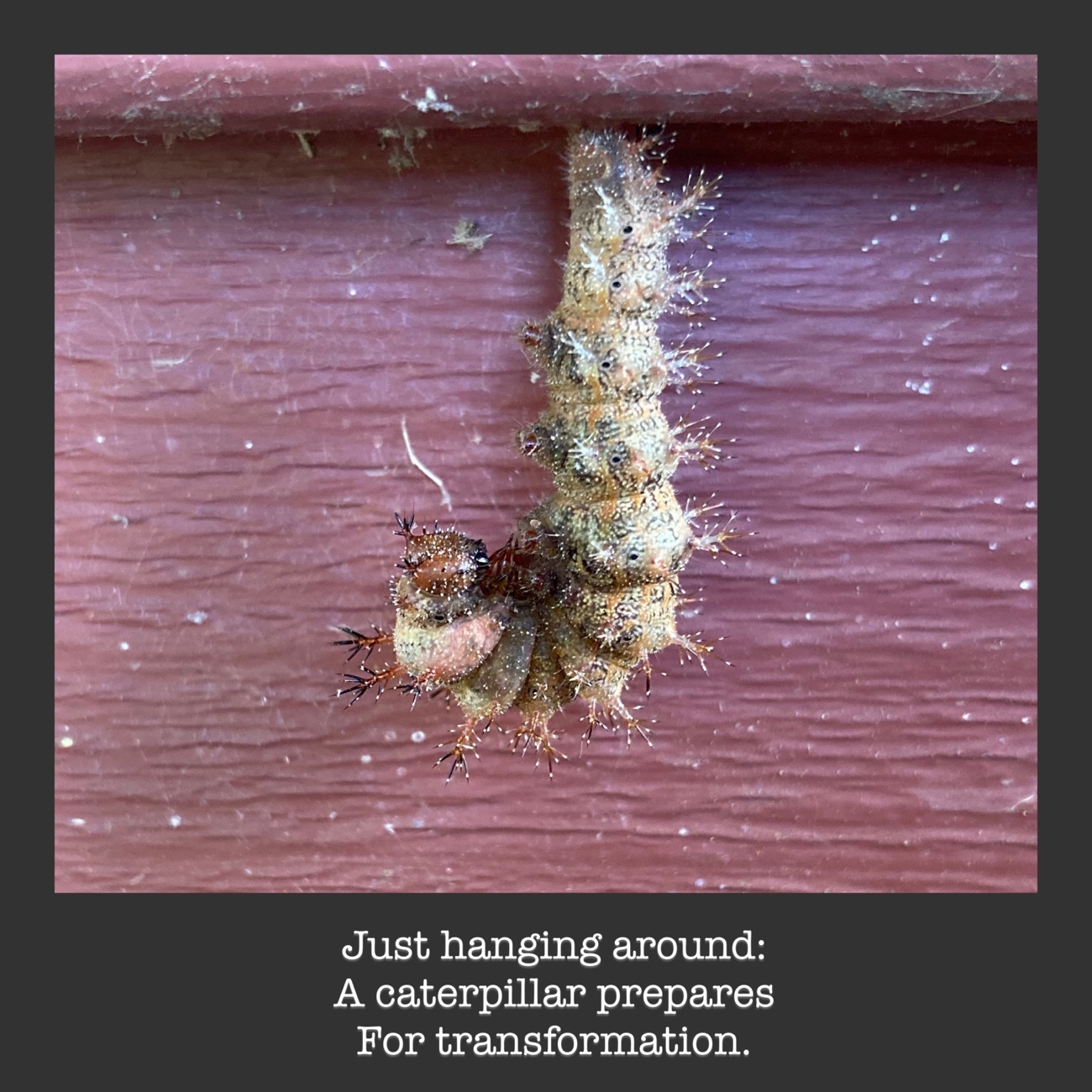
A caterpillar has chosen a spot on the porch’s siding for its rebirth, and I couldn’t be more pleased; I may actually have a chance to see what this fantastic creature (doesn’t it look like it belongs in the sea, rather than on land?) metamorphoses into. A moth? A butterfly? I hope I’ll find out!
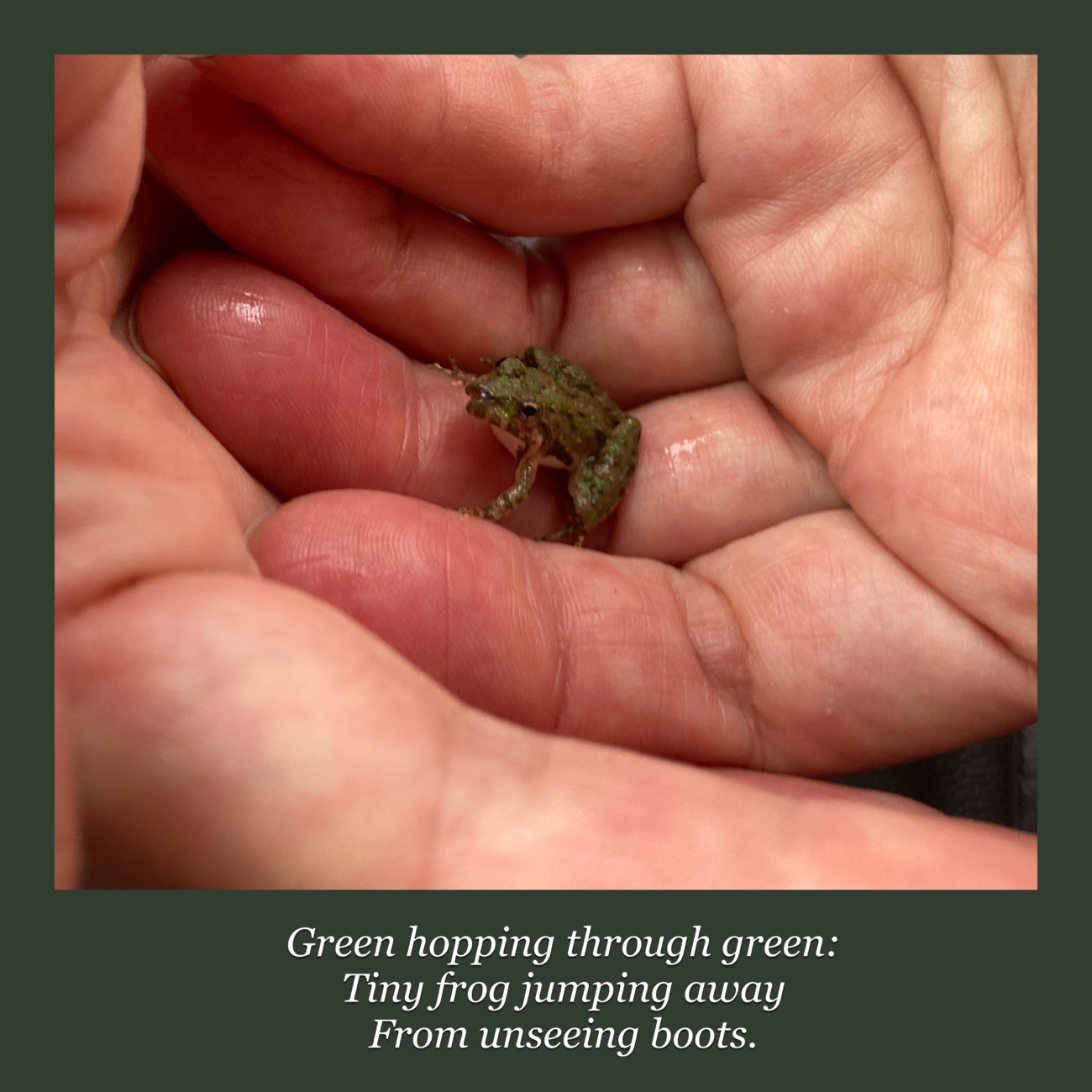
Life can be hard if you’re a very tiny frog. I found this diminutive one near a puddle on the edge of the driveway. It jumped away from me as I walked near it, through a grassy area turned into marsh by recent rainfall. I think I may have seen it the other day – something leapt in the grass in the same area – but concluded that it was probably a large grasshopper. I wasn’t convinced, though.
This tiny frog could jump astonishingly high, flinging itself away so violently in its efforts to escape that it flipped itself over more than once. Fortunately, it landed in thick, wet, grass and I was able to very gently capture it for a very quick photo (I am an experienced frog catcher, having spent a good portion of my youth practicing the skill – lol!).
Interestingly, this frog seems to have a cleft in its upper “lip” area that looks (at least externally) similar to a human cleft palate. Whether the deformity was congenital or due to injury, the little creature seemed otherwise healthy. I returned it to the grassy edge and wished it luck…because with all of the obstacles to living its life – even in the country – it needs it.
Did you figure out the “two lives” reference in the title? From Vocabulary.com: “the word amphibian comes from the Greek word amphibios, which means ‘to live a double life'”, referring to the fact that amphibians live their early lives in water, then, later, on land.
Read more about why frogs are important: https://phys.org/news/2017-05-frogs.html
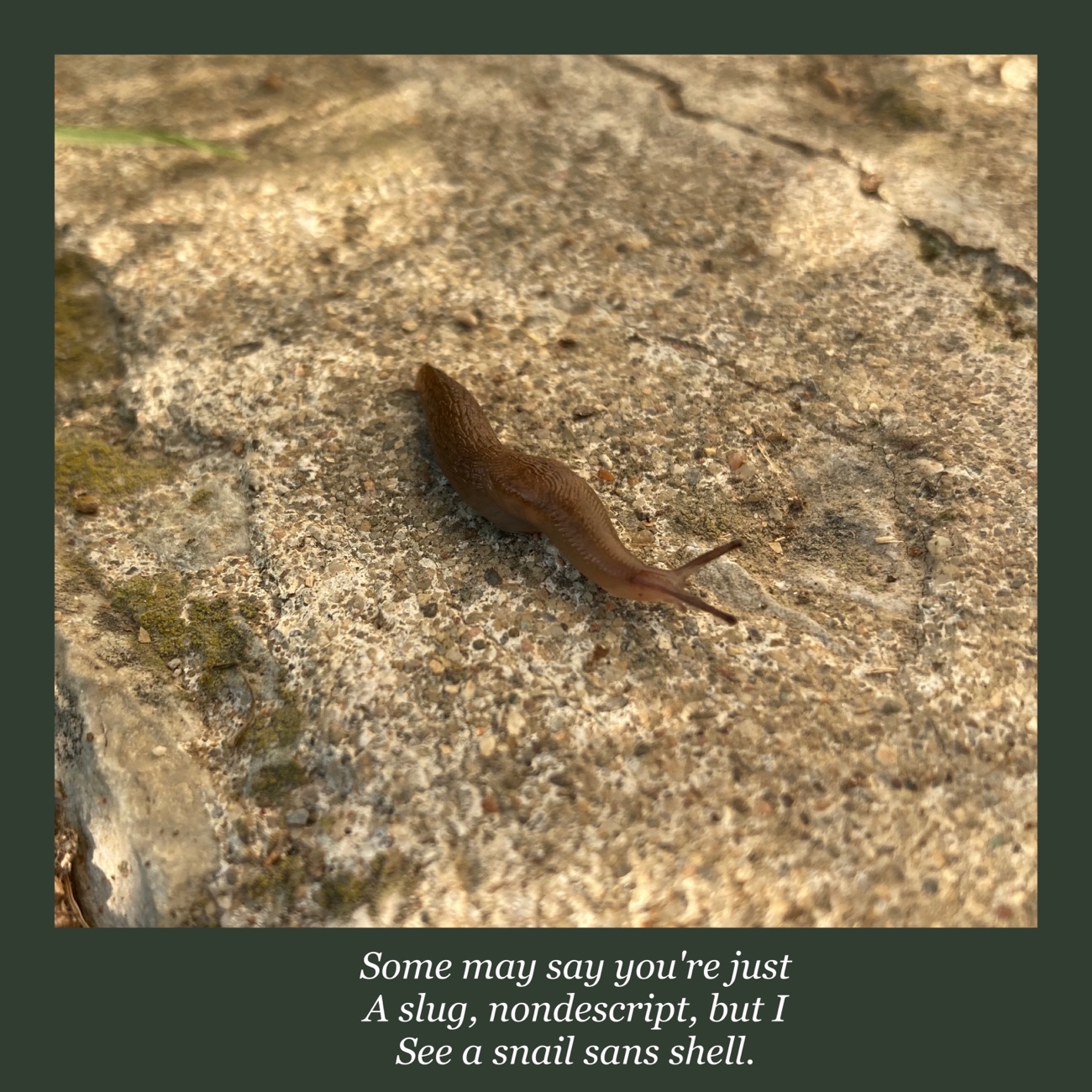
Slugs seem to get no love. I’ve considered why I’m enamored of snails, with their wonderfully whorled shells, but not slugs…and realized that it’s unfair. A slug is basically a snail, without that magnificent shell upon its back. Did it choose to live its life without a shell? Of course not. So, I’m consciously making an effort to appreciate the beauty of the slug, like the subtle but striking raised pattern on its skin – resembling a fingerprint – orhow it seems to effortlessly and soundlessly glide along the ground.See the beauty of the slug today.
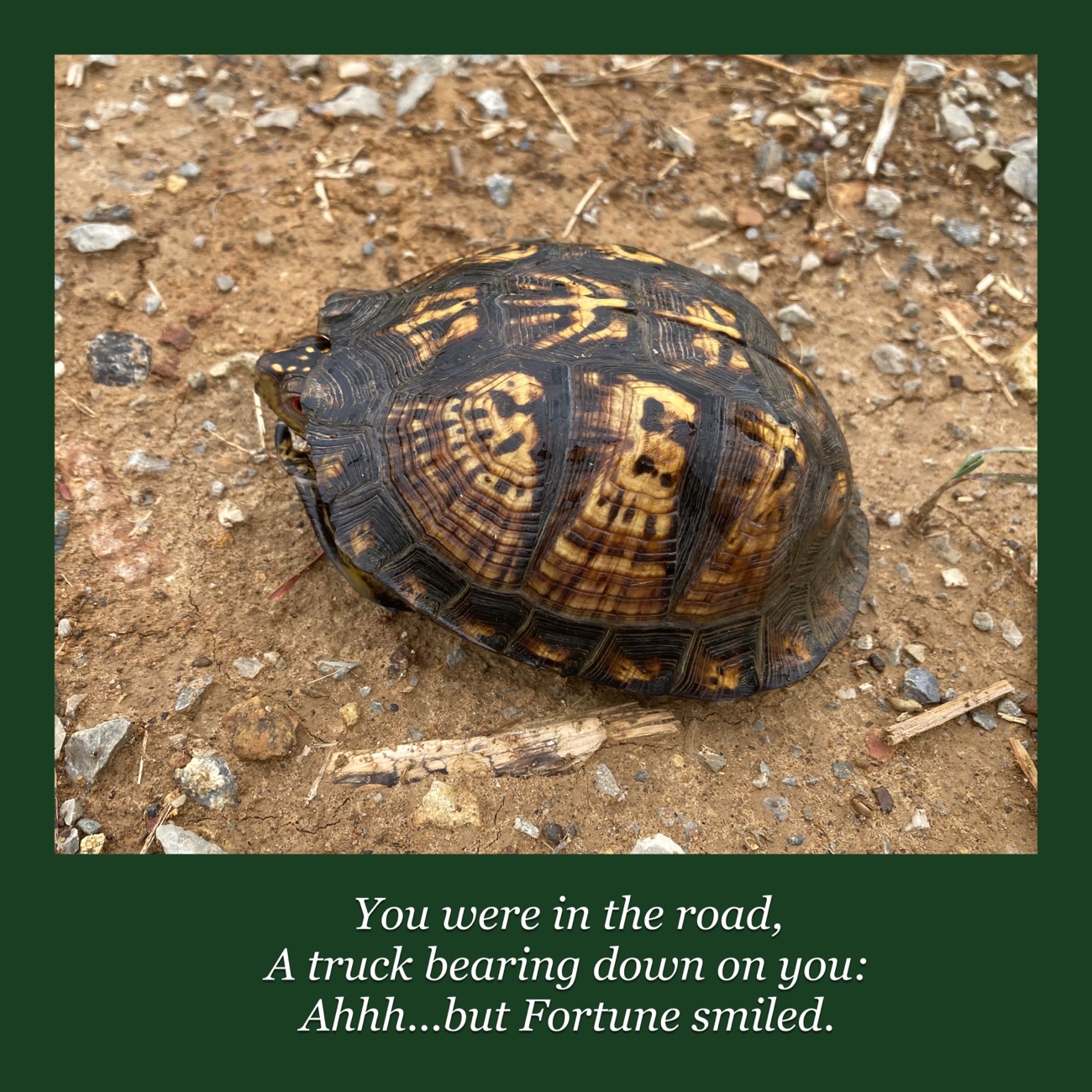
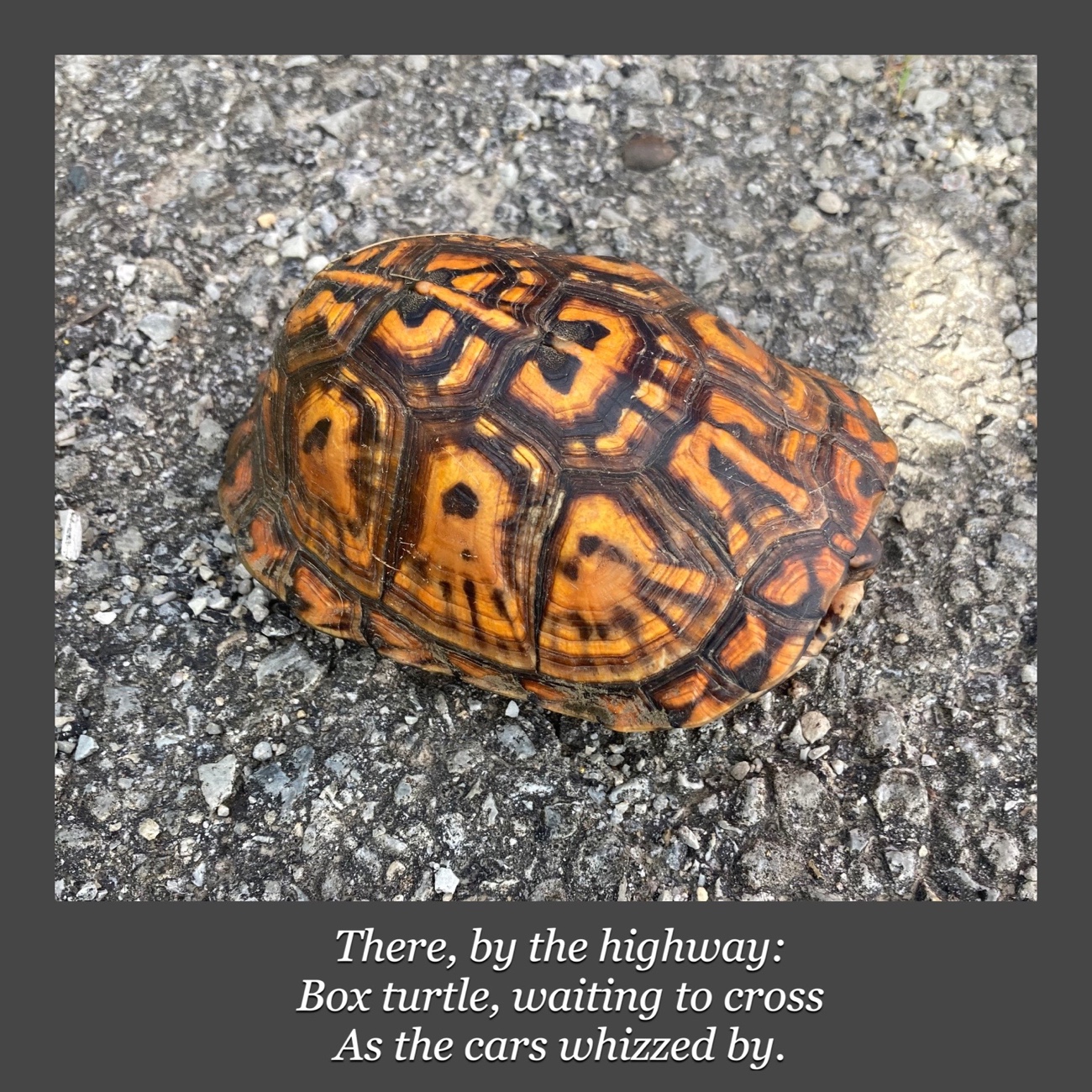
As I mentioned in an earlier post, it’s breeding season here for Eastern Box Turtles, and the poor creatures often try to cross busy roads to get to their destinations…and you can guess how that plays out. We had another opportunity today to help a small turtle get across the road safely, and – with luck – we were successful.
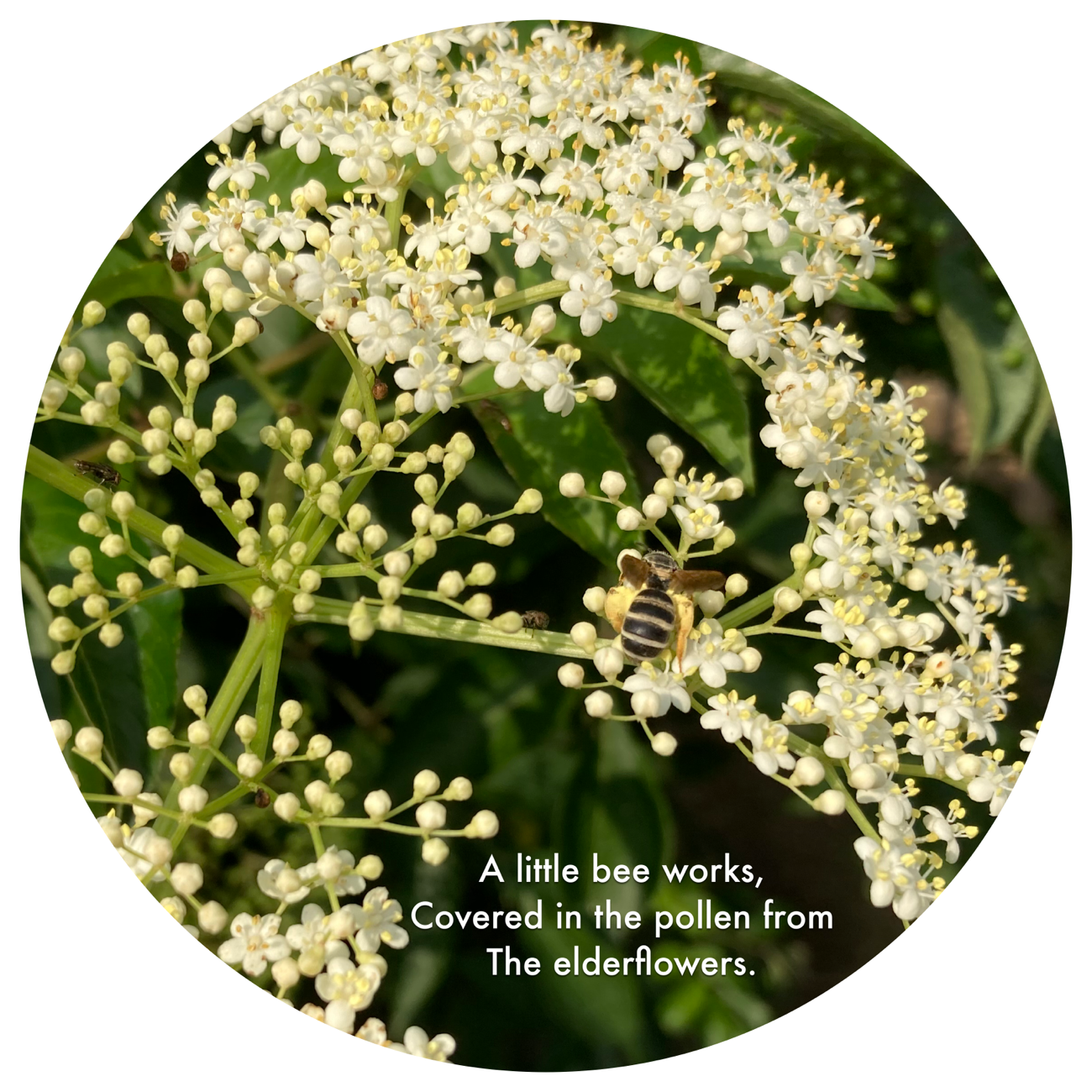
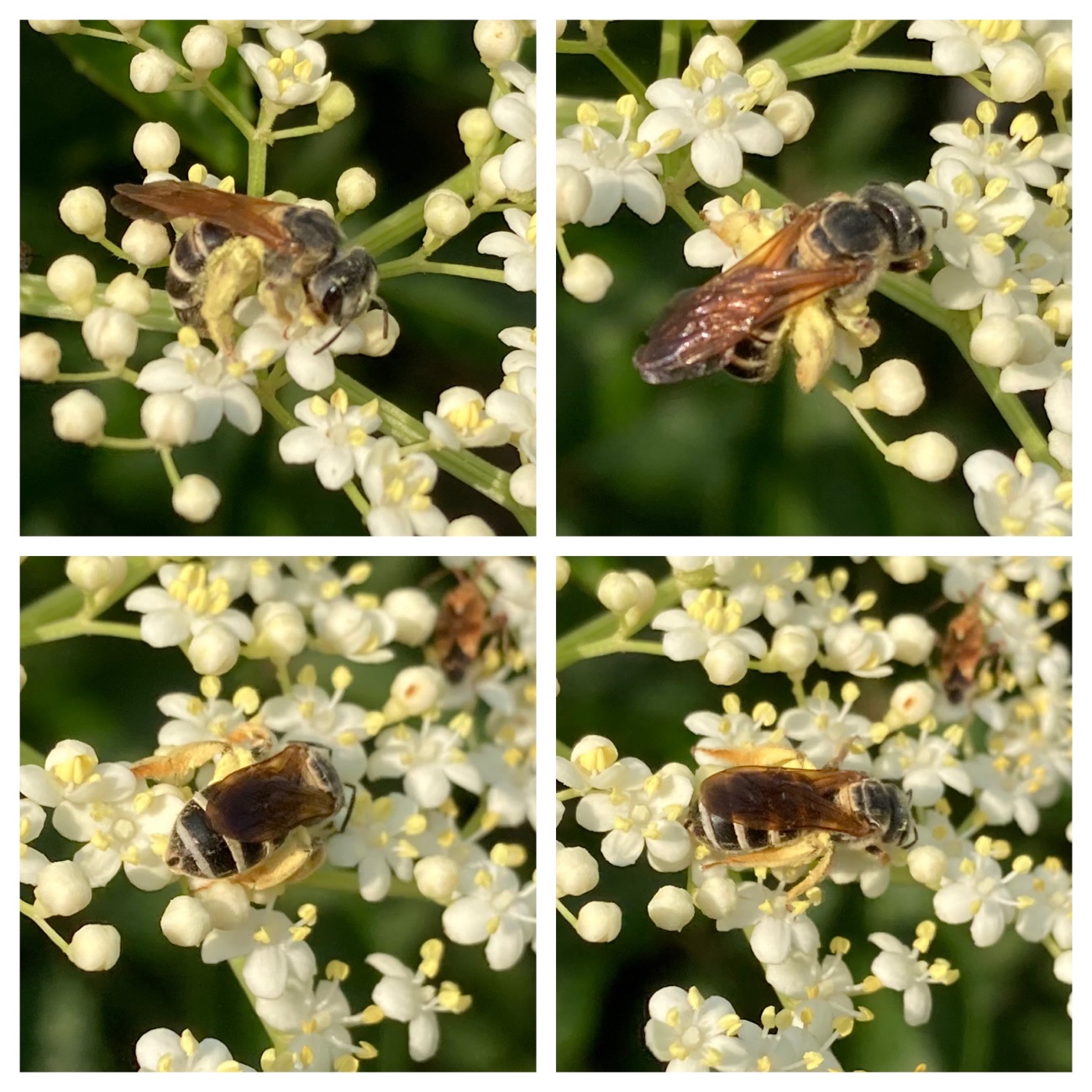
It’s been a banner year for the elderflowers (sadly, the same can’t be said for some other flowers and plants, like the day lilies that fizzled out early, probably due to the dry conditions), and visions of a bumper crop of elderberries – and elderberry syrup and wine – dance in my head. If those visions become reality, I have pollinators like this tiny bee to thank. And I wholeheartedly do thank them!
Enlarged for detail – look at all the pollen on her legs!
It’s the time of year when Eastern Box Turtles move to their nesting grounds; often, it means crossing busy roads, which is frequently deadly for them. We try to help where we can, which means keeping an eye out for these beautiful, but slow, creatures.