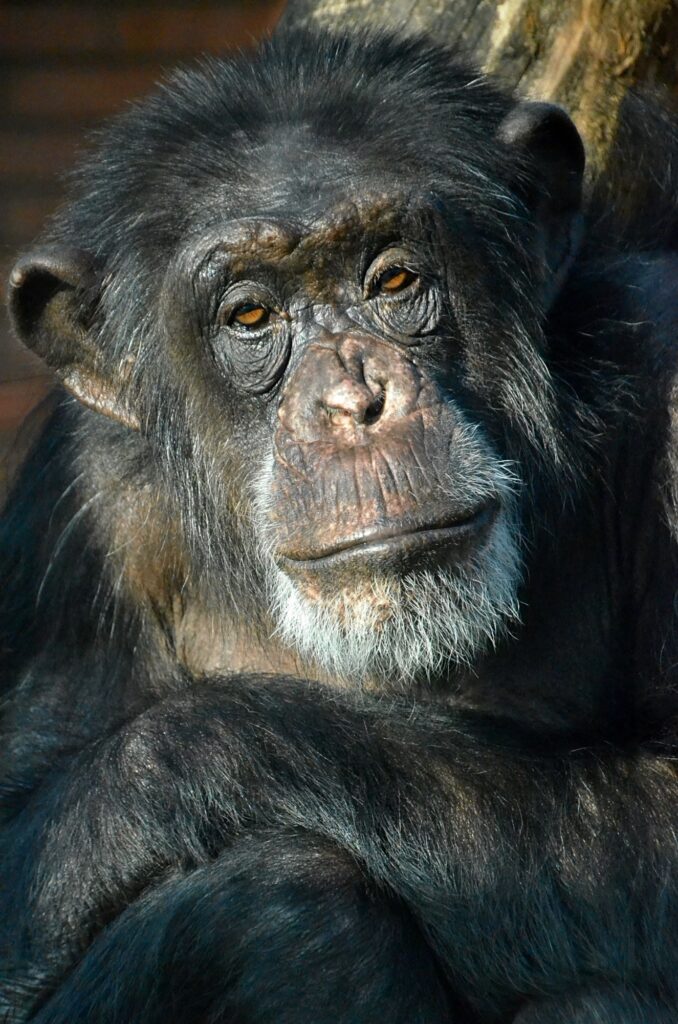
When I lived in the Pacific Northwest, I had the opportunity to visit a special sanctuary in the small central Washington town of Cle Elum. Cle Elum is a quaint town that is probably best known for being in close proximity to Roslyn…the actual town where “Northern Exposure” was filmed in the 1990s. One day, while at a brewpub, I noticed a small flyer on the wall that advertised an event to benefit Chimpanzee Sanctuary Northwest. I went home and looked up the organization. I was amazed that I had not heard of it prior, and incredibly impressed by the facility and the the expertise and caring of those involved. Read about how Chimpanzee Sanctuary Northwest was founded in this Seattle Times article.
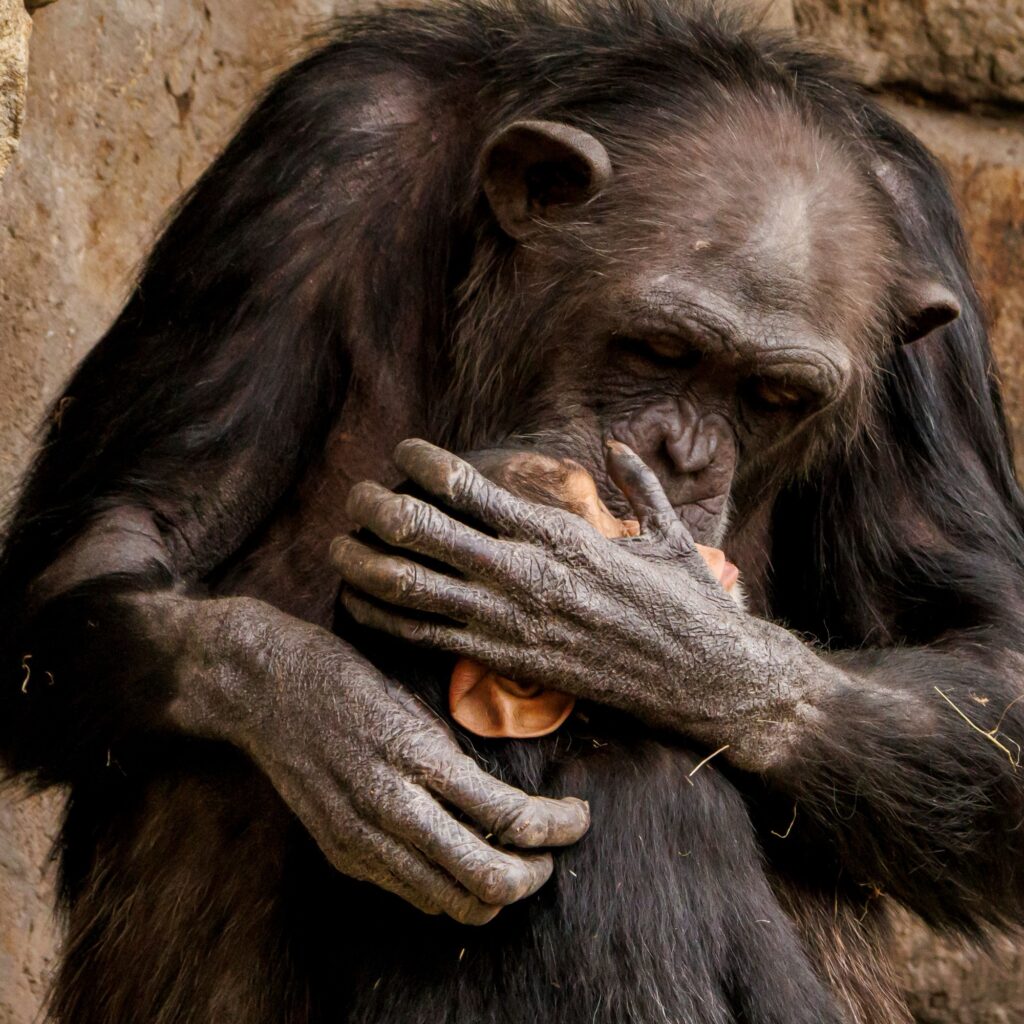
Thereafter, Mr. fMf and I began attending the organization’s events and were honored to be able to support such an admirable organization. We had the opportunity to meet its leaders and, once, to even visit the seven original chimpanzees – the Cle Elum Seven. Note that this is a sanctuary, not a zoo, so it is not open to the public. All of the original chimpanzees had been biomedical research subjects, experimented on and confined to small cages. The female chimpanzees had been bred and their babies had been taken away from them almost immediately after birth, many also ending up in biomedical research; Honey B, daughter of Missy, one of the original Seven, was brought to the sanctuary in 2019, but she and her mother were unable to be integrated together because they simply do not know each other – according to the sanctuary, Honey B was taken away from Missy “within hours” of her birth.
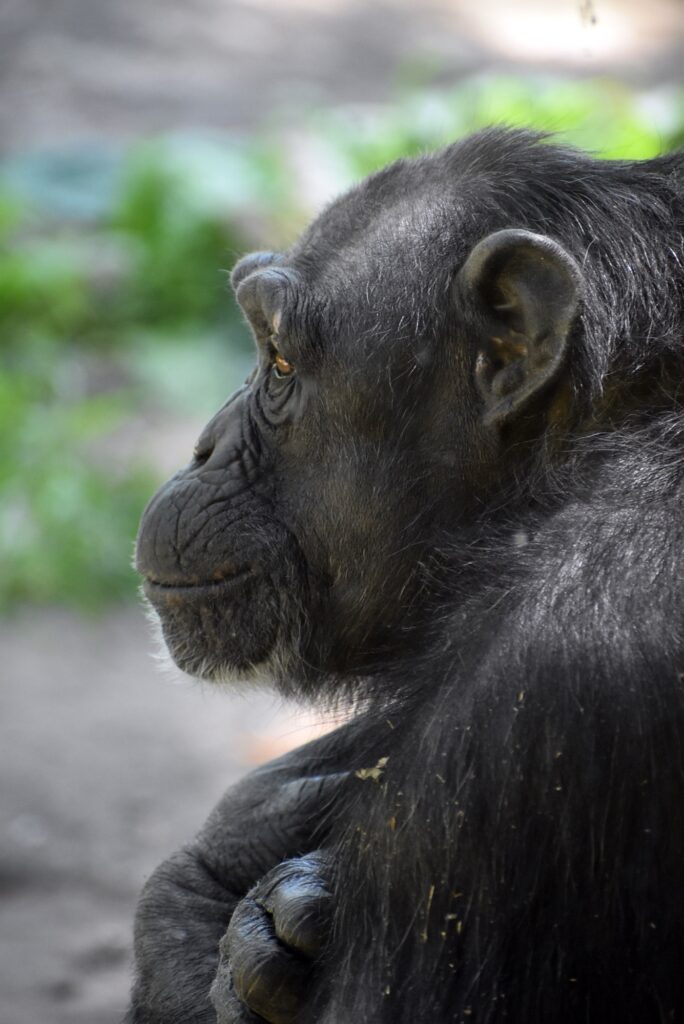
It’s been more than a decade now since we’ve seen our friends at the sanctuary. Just as we’ve aged, they have, too. J.B., co-director of Chimpanzee Sanctuary Northwest, wrote a blog post addressing life expectancy in chimpanzees, and says that the “median life expectancy is 31.7 years for males and 38.7 years for females.” For those of us who may be a bit rusty in statistics, Investopedia defines median as “the point above and below which 50% of the observed data falls, so it represents the midpoint of the data.” Imagine, then, if your life expectancy was 31 years, how spending most of that confined to a very small cage would feel.
A chimpanzee that holds a special place in my heart is Negra, the “matriarch” and oldest of the Cle Elum Seven (which expanded since our visit to include nine additional chimpanzees, all of whom also were used in biomedical research). It saddens me to know that Negra was taken as an infant from the wild in Africa, that she was also used in biomedical research, and that she also had babies who were taken from her. Negra arrived at the sanctuary in 2008, when she was 35. Today, she is 53, and she has recently experienced physical issues that limit her mobility. I can’t help but wonder how the decades she spent confined to a 5×5 cage contributed to her recent health issues, not to mention the trauma she experienced as an involuntary research subject. The sanctuary, however, is ensuring that Negra continues to have a life filled with joy and companionship, despite her physical limitations.
The sanctuary has lovely, expansive grounds that offer the chimps the choice of running up grassy hills, climbing, smelling the fresh country air, watching the wildlife, or simply staying inside their spacious inside enclosure, which also has climbing opportunities and other enrichment. The resident chimpanzees eat thoughtfully-prepared, nutritious, vegan meals and you should see the parties the chimpanzees enjoy for special events, like birthdays and holidays. Who wouldn’t want to attend a party like that?? The safe, nurturing post-research life the rescued chimpanzees enjoy today is made possible by the hard work of the sanctuary staff and volunteers, as well as the generosity of donors. Chimpanzee Sanctuary Northwest is a truly worthy cause and if you read a few blog posts, you’ll understand why supporting this organization is so important.
A titan in the field of primatology, Dr. Jane Goodall dedicated her life to studying and advocating for chimpanzees. Though she died in October 2025, her legacy continues to live on in the continued conservation and animal welfare activism, the evolving understanding of animal behavior, and the inspiration her work provided for future (and particularly female) scientists. Dr. Goodall’s Reflection on World Chimpanzee Day is candid yet hopeful. Chimpanzees, like many of the world’s wild animals, are facing numerous human-created challenges to survival. It would be a sad day, indeed, if the only chimpanzees left on the planet lived in zoos or sanctuaries because wild creatures belong in the wild.
Looking for more reading? Sadie Jacobs’ article on “The Long Journey from Experimentation to Sanctuary for Chimpanzees” describes the challenges involved with trying to get biomedical research chimpanzees to sanctuary after the NIH was required by law to retire them. Jacobs’ article details how it took a lawsuit by animal welfare groups and private parties against the NIH to get the agency to comply the CHIMP Act. It is shocking and heartbreaking to read that when the chimpanzees were finally moved from the Alamogordo Primate Facility to Chimp Haven between November 2024 and April 2025, their ages ranged from 39 to 62.